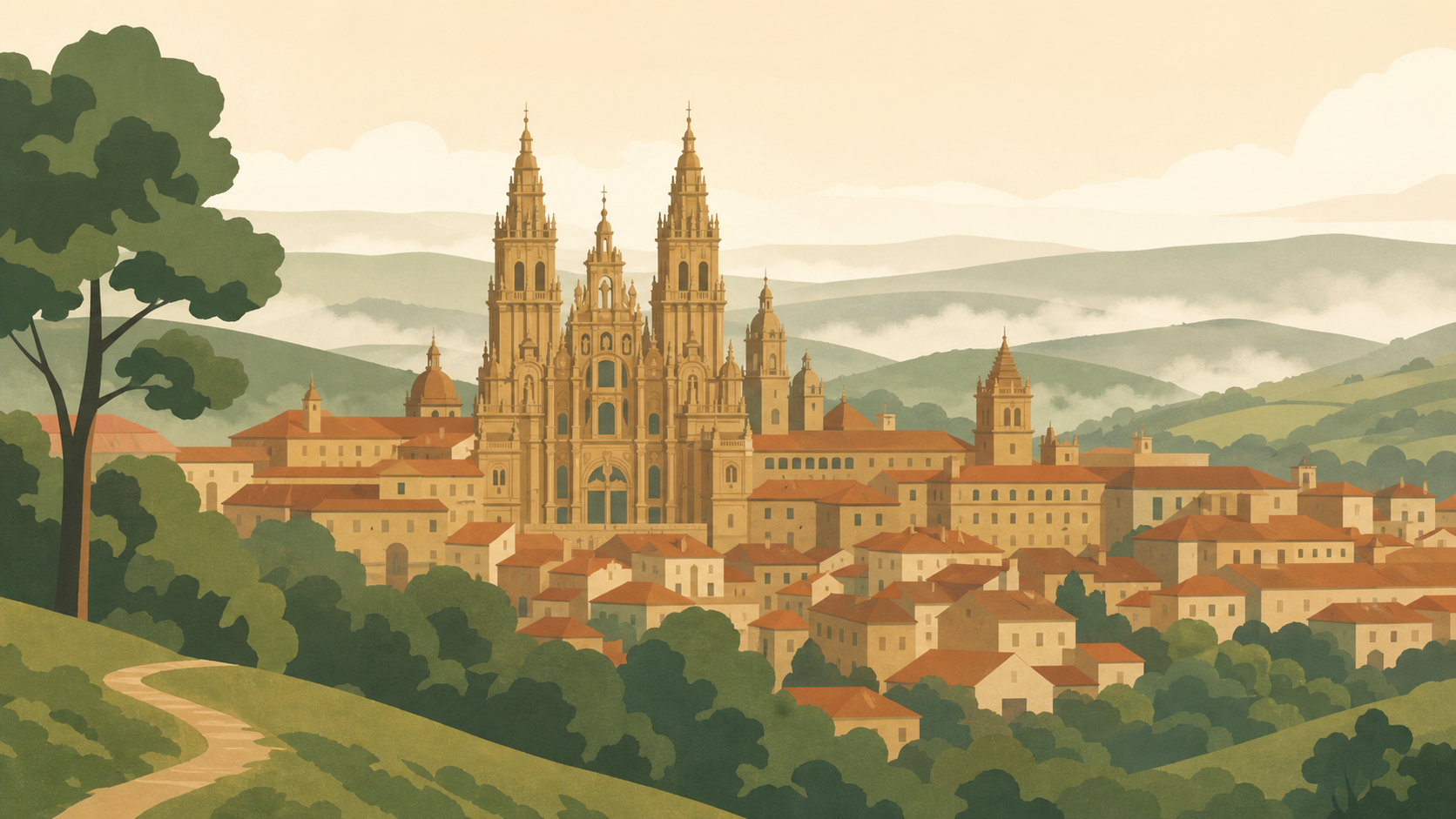
The Camino begins wherever you begin.
The Way is a network, not a single trail. Explore historic approaches across Iberia and recognized pilgrim beginnings across the Atlantic.
Iberian Caminos
Classic routes through Portugal and Spain. Distances vary slightly by variant; waypoint markers here are curated journey highlights, not turn-by-turn navigation.
 Walk now
Vía de la Plata
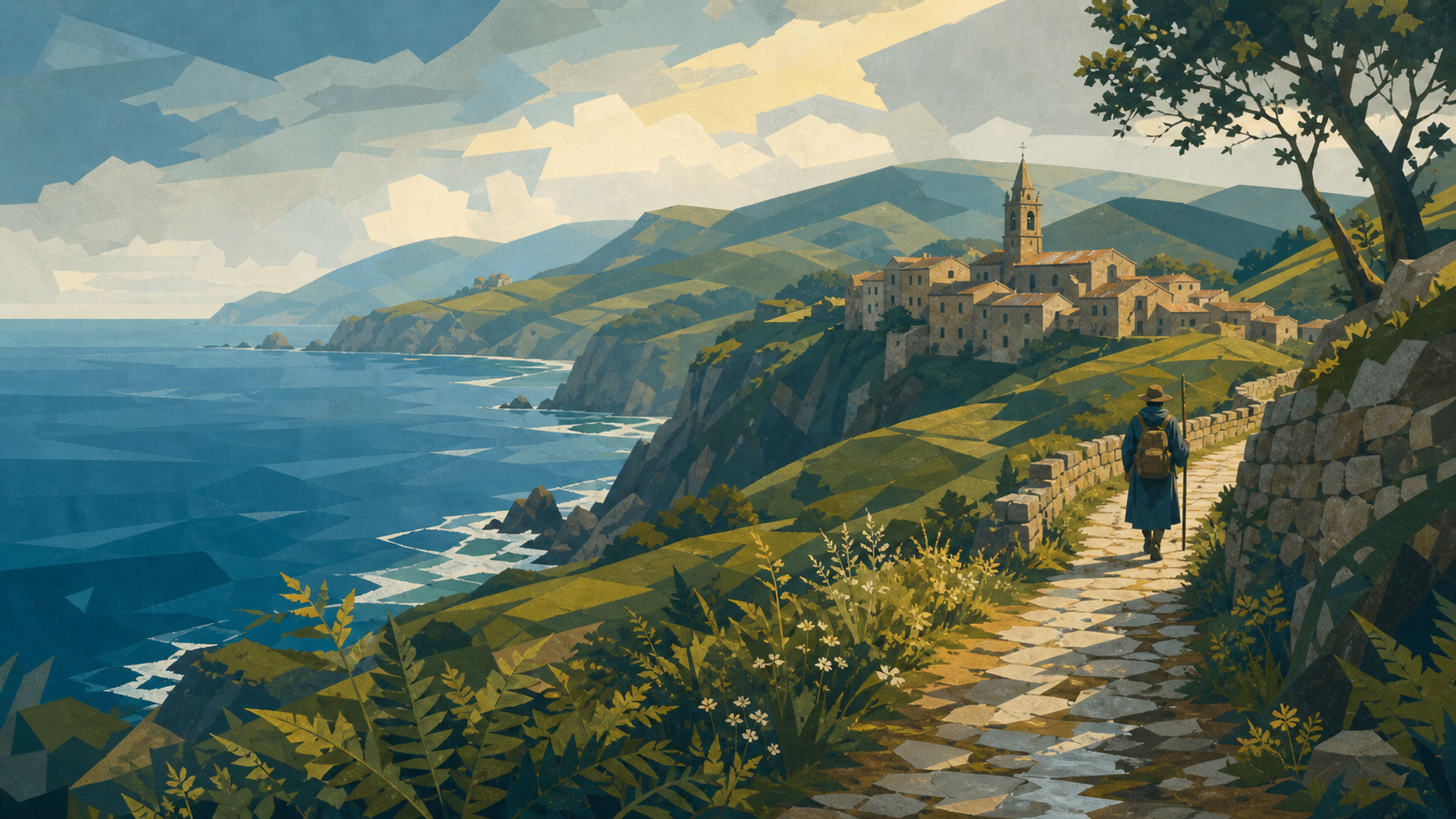
A long southern Camino from Seville through Andalucía, Extremadura and the old Roman-road corridor, then following the Sanabrés continuation through A Gudiña, Laza and Ourense toward Compostela. Its 970 km progress scale uses curated orientation anchors.
 Walk now
Camino del Norte
Spain's great northern Camino, following the Bay of Biscay from Irún through the Basque Country, Cantabria and Asturias before turning inland across Galicia to Santiago.
 Walk now
Camino Francés
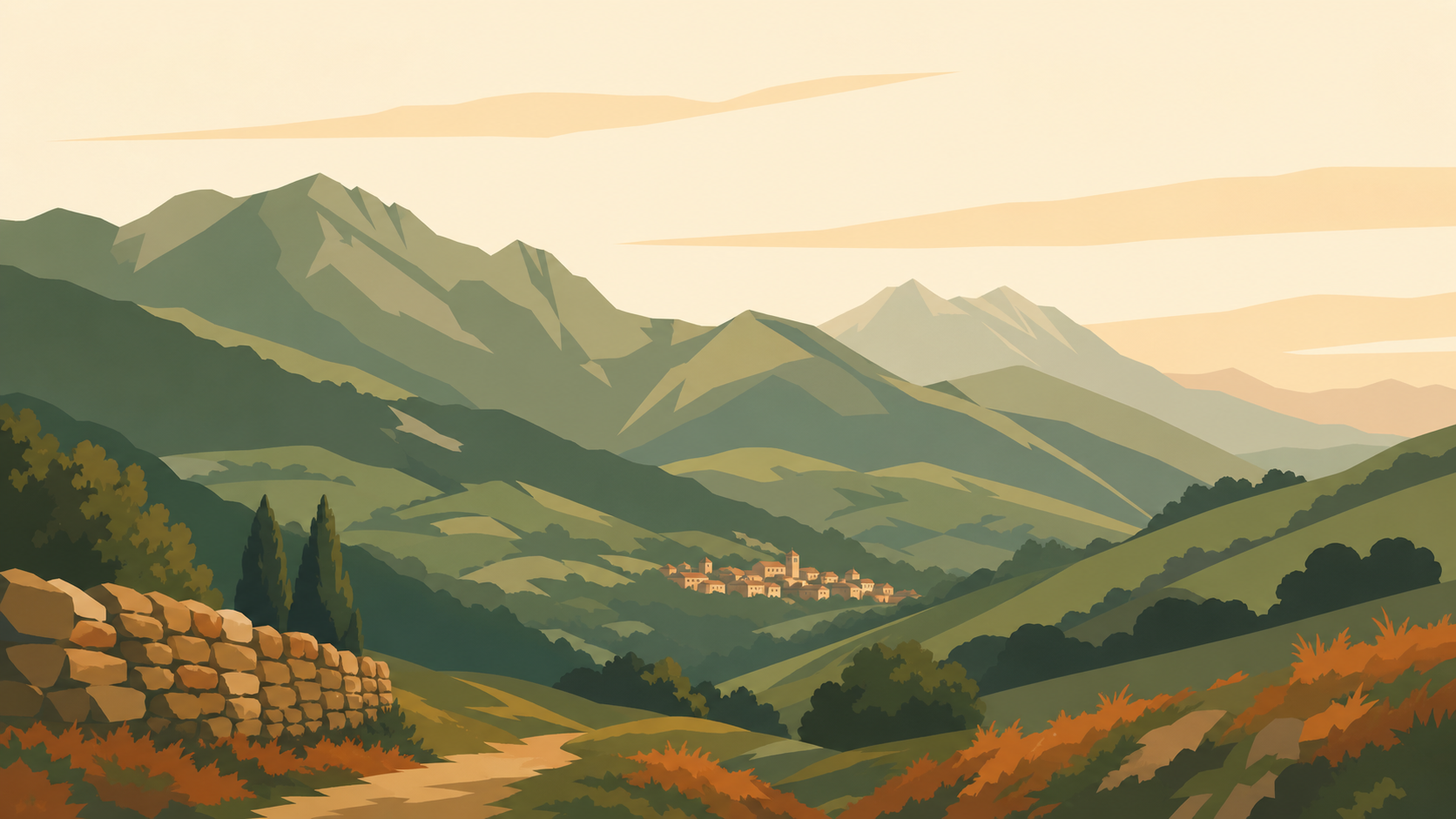
The classic French Way, from Saint-Jean-Pied-de-Port in the French Pyrenees to Santiago de Compostela in Galicia — the most popular and best-documented route of the Camino de Santiago.
 Walk now
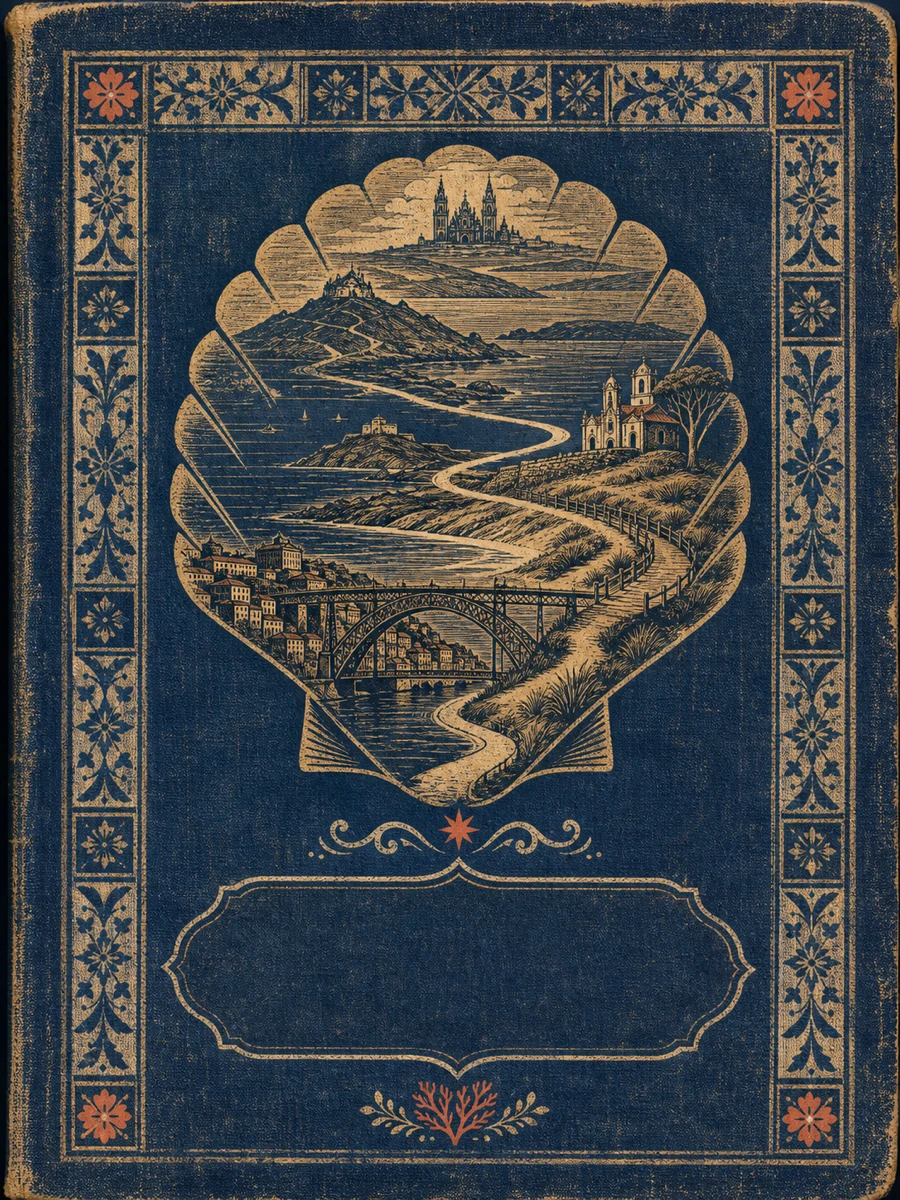
Camino Primitivo
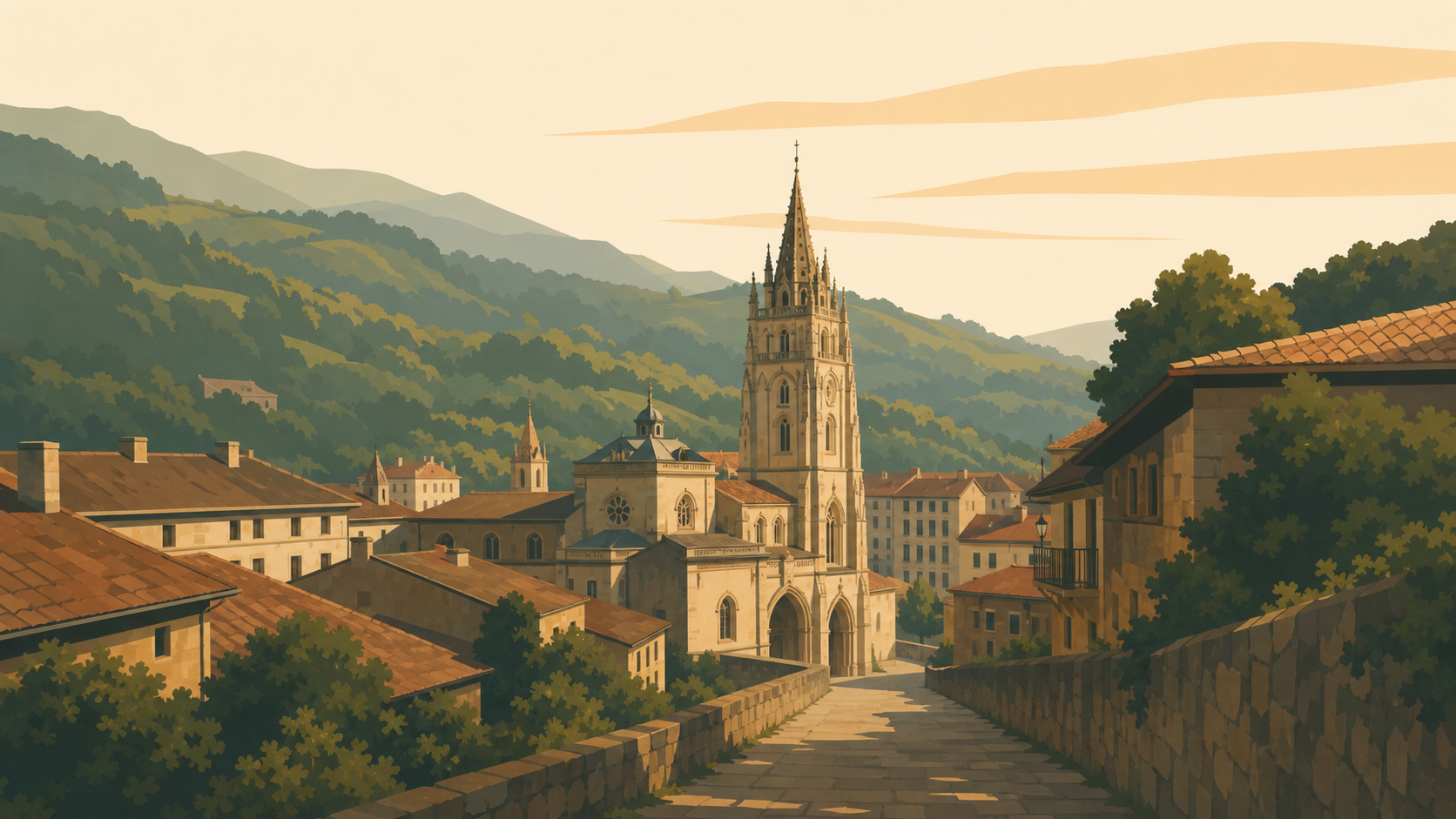
The original Way from Oviedo—quiet Asturian hills, high passes and Roman roads, the walls of Lugo, and a final joining with the road to Santiago.
 Walk now
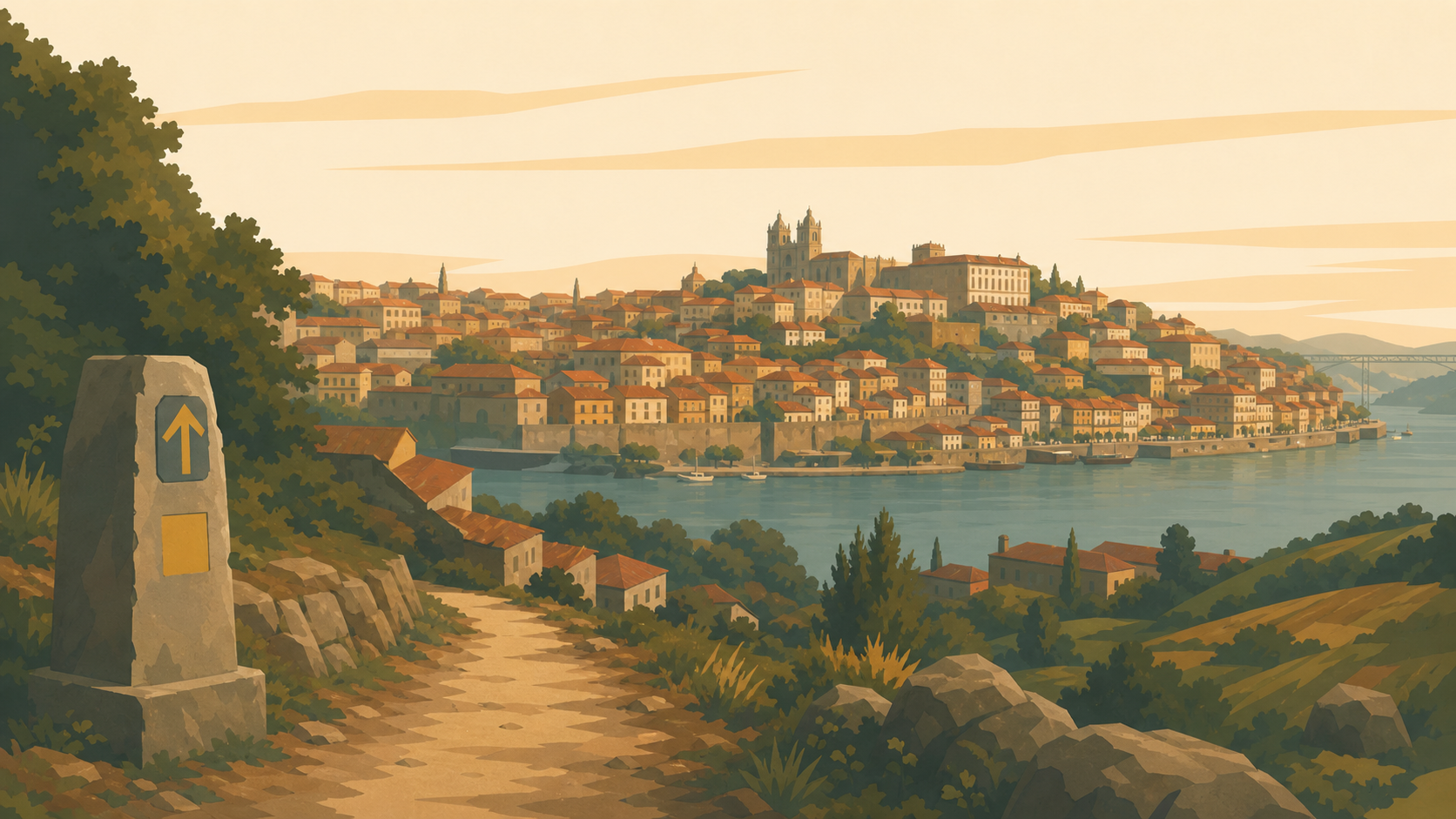
Camino Portugués Coastal
An Atlantic alternative from Porto, following boardwalks, fishing towns and estuaries north to A Guarda, Baiona and Vigo before joining the inland Portuguese road toward Santiago. This virtual presentation uses a curated 280 km scale; real coastal and littoral variants differ.
 Walk now
Camino Portugués
The central Portuguese Way from Porto: old towns, vineyard country, the crossing of the Miño into Galicia, and the final approach through Padrón to Santiago.
 Walk now
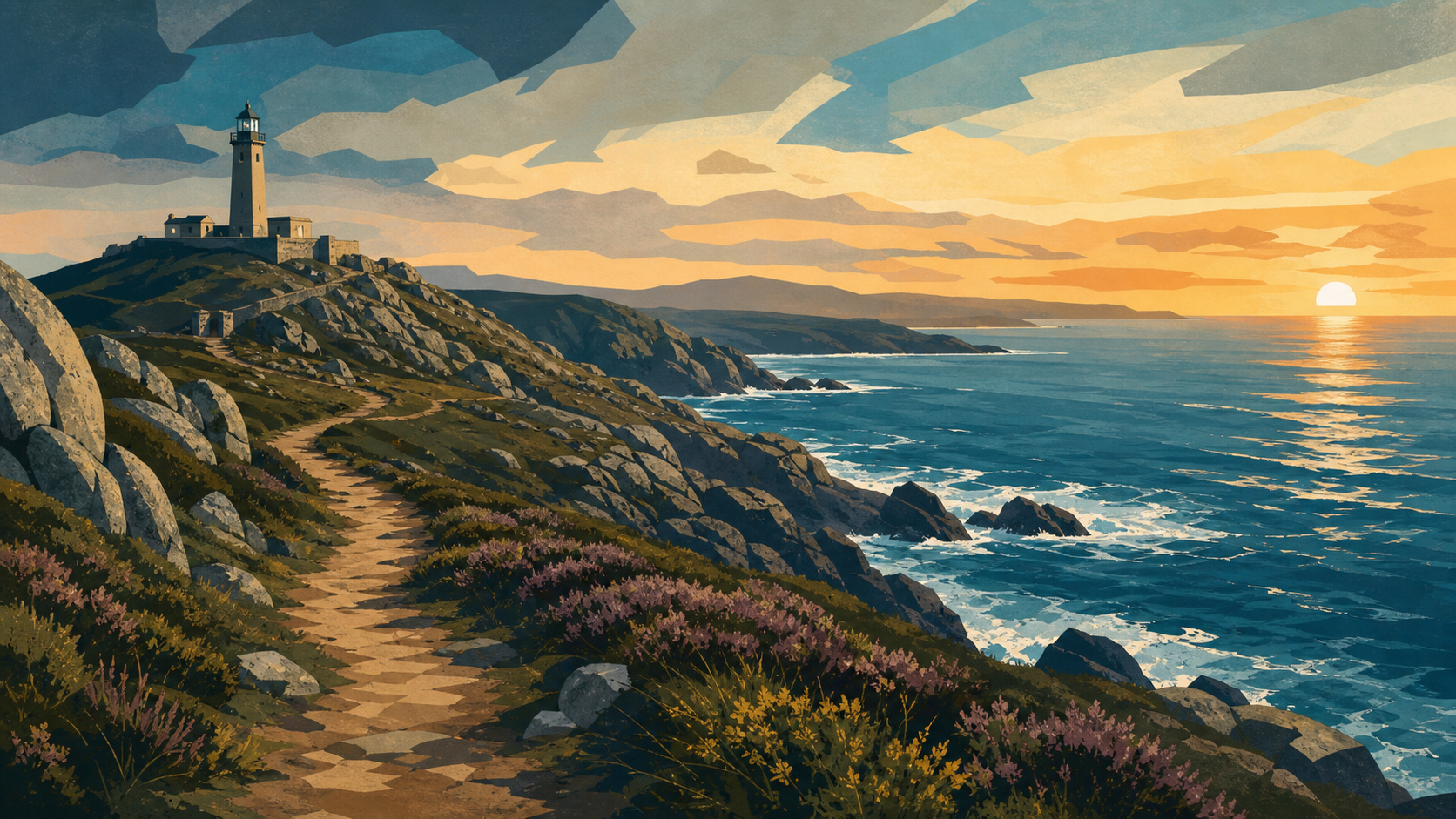
Camino de Fisterra and Muxía
The road beyond Santiago: west through Negreira to the Costa da Morte, the sanctuary at Muxía, and Cape Fisterra where the land falls into the Atlantic.
 Walk now
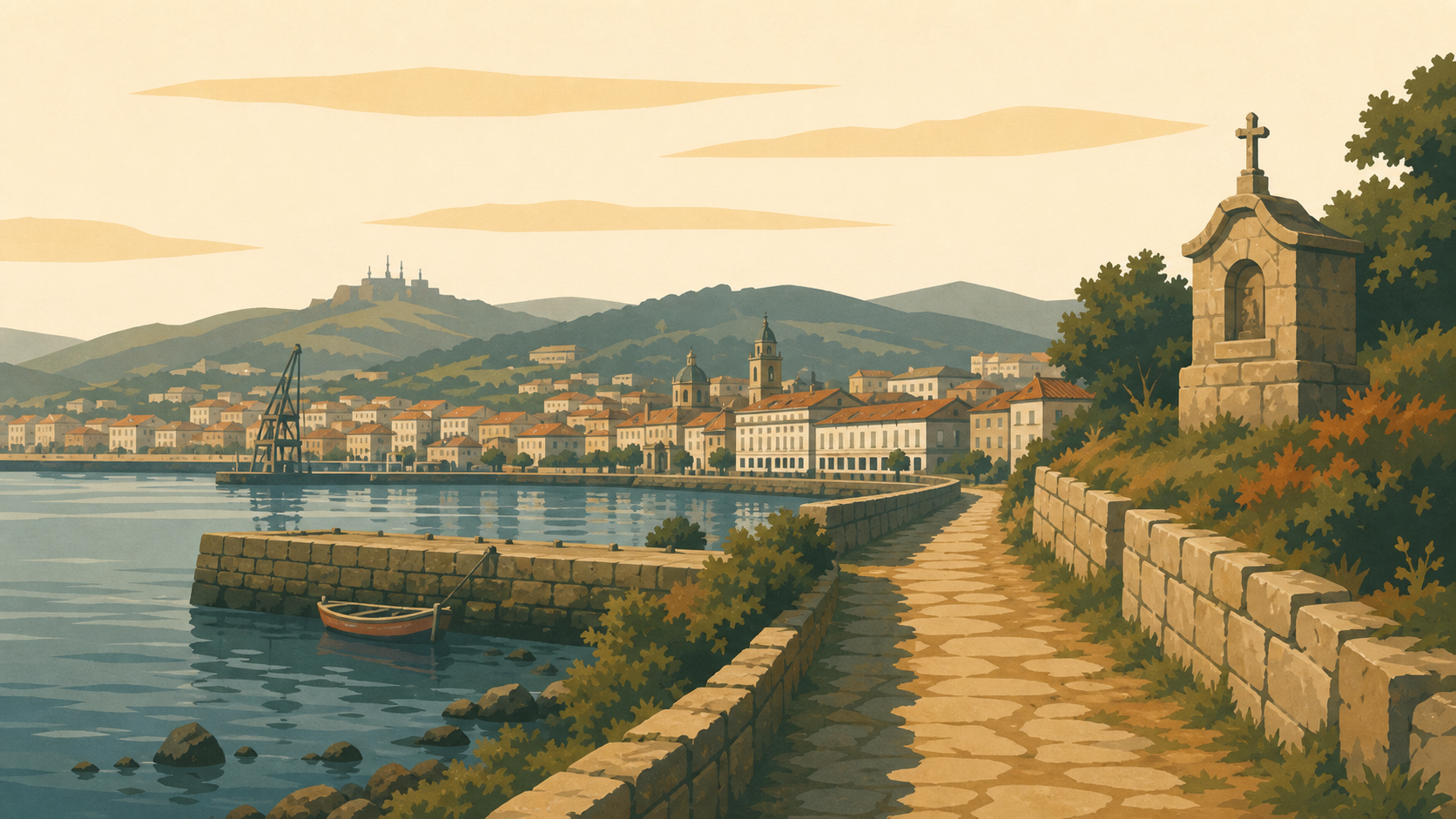
Camino Inglés
The maritime Way used by medieval pilgrims arriving from Britain, Ireland, Flanders and Scandinavia—from Ferrol's Curuxeiras docks through estuary towns, wooded Galicia and Santiago's northern gate. This tracked journey follows the 112.4 km Ferrol branch; the shorter A Coruña branch remains outside this route because it joins at Bruma and needs its own progress model.
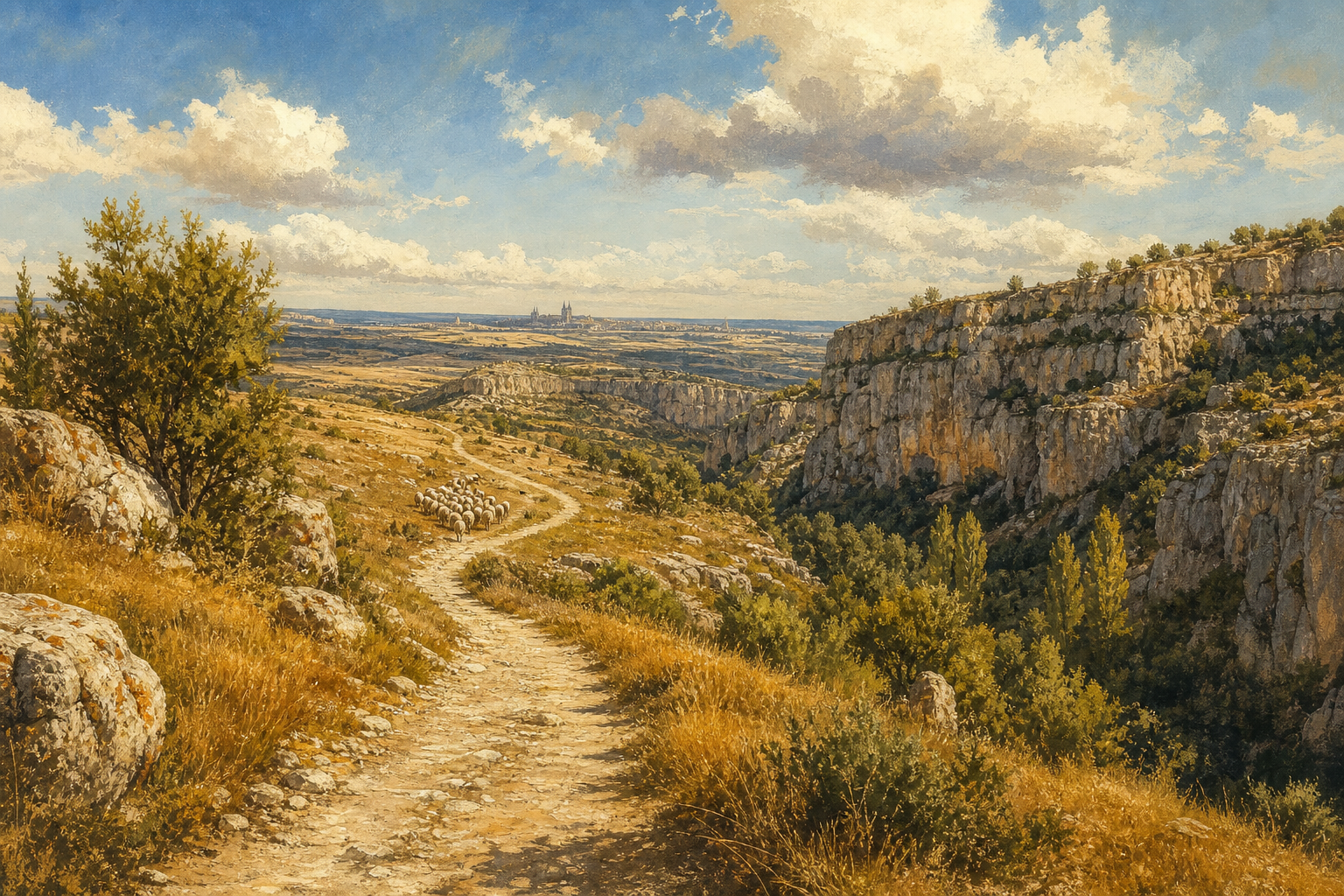
Camino de la Lana
A long and solitary connector following old wool and livestock roads from Alicante through Cuenca and the Upper Duero to Burgos, where pilgrims join the Camino Francés.
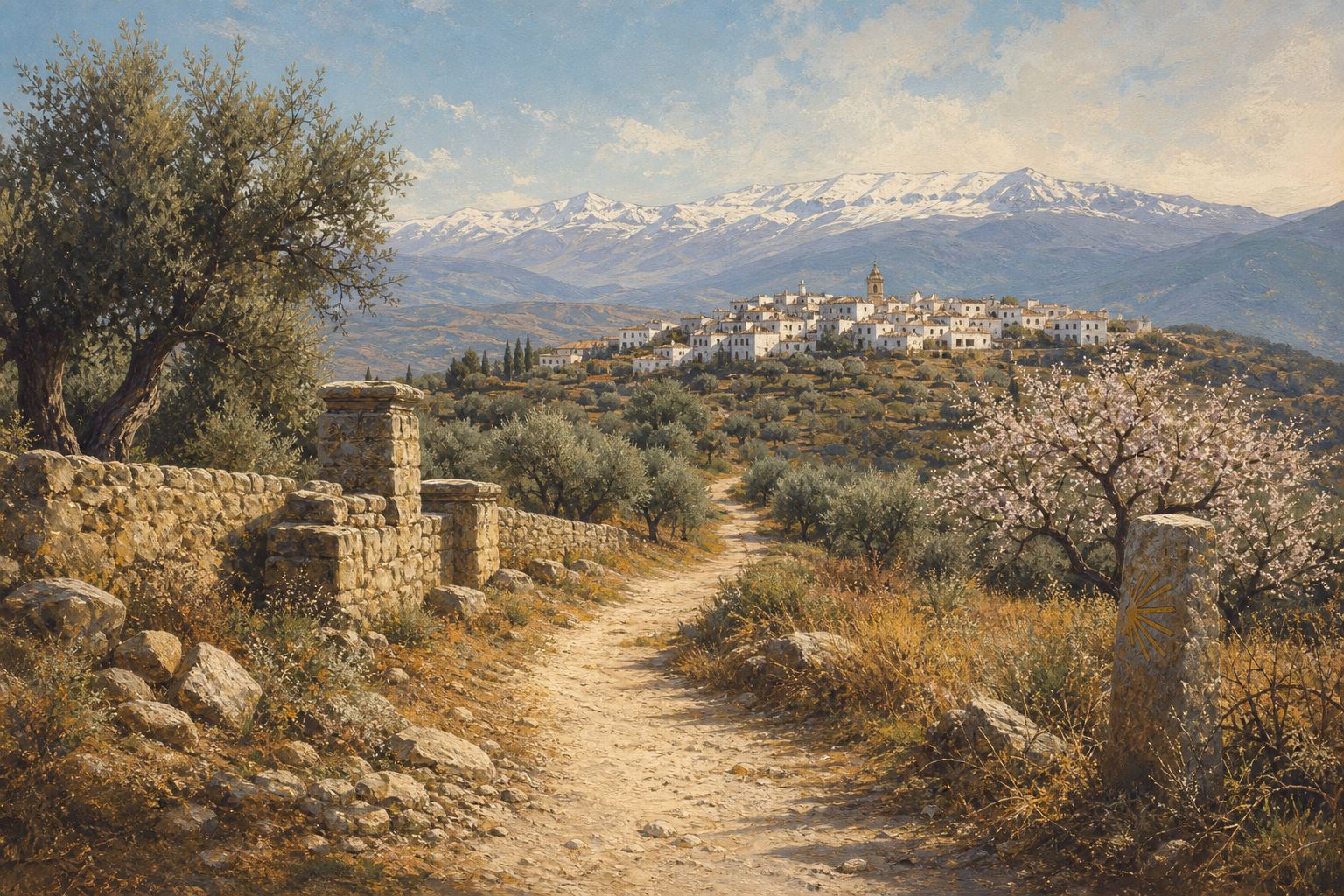
Camino Mozárabe
A southern network shaped by paths from Almería, Málaga, Granada and Jaén. This catalog line follows the Almería branch through Granada and Córdoba to Mérida, where it joins the Vía de la Plata.
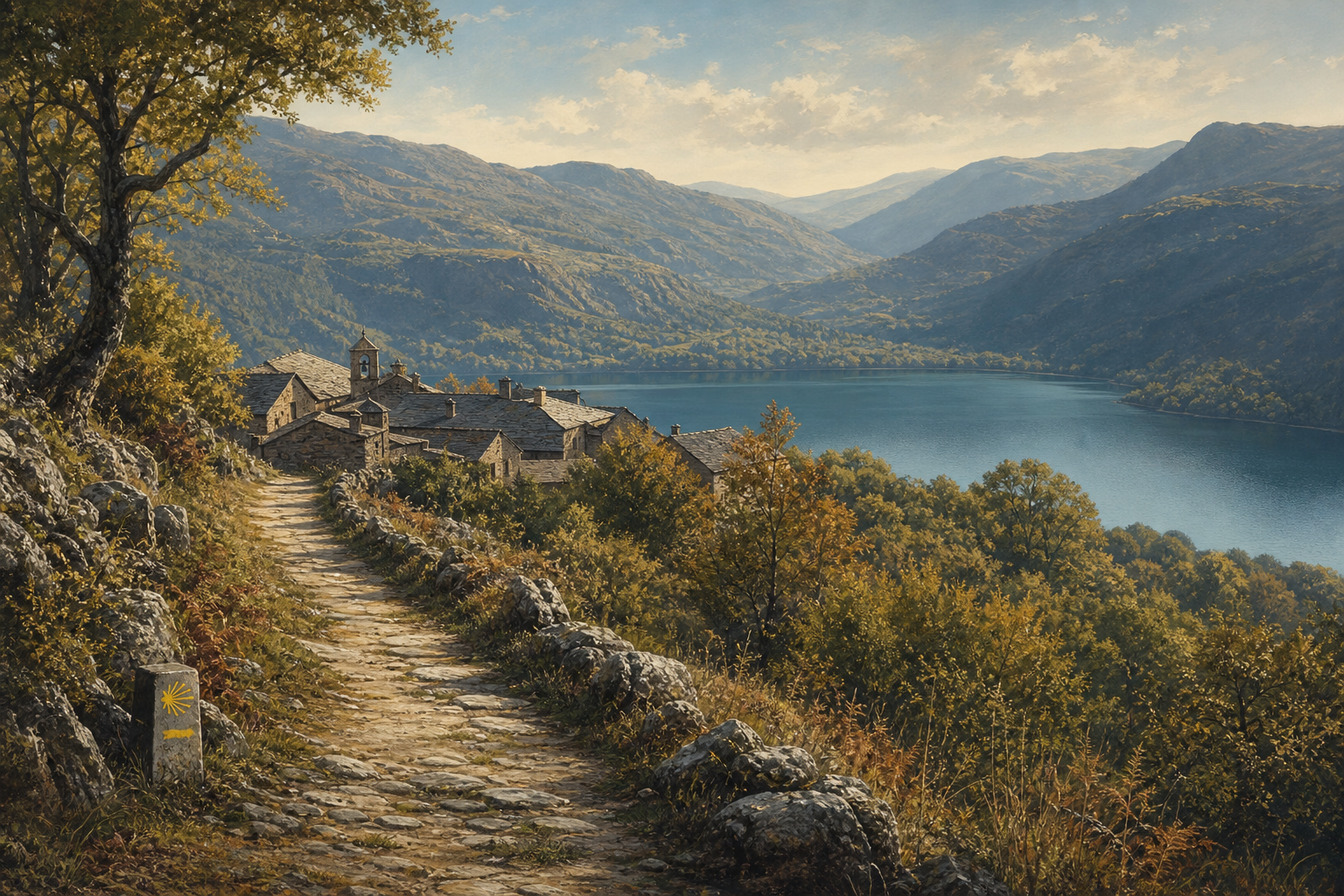
Camino Sanabrés
A quieter northwestern Camino leaving the Vía de la Plata at Granja de Moreruela, crossing Sanabria and the Galician mountains before approaching Santiago through Ourense.
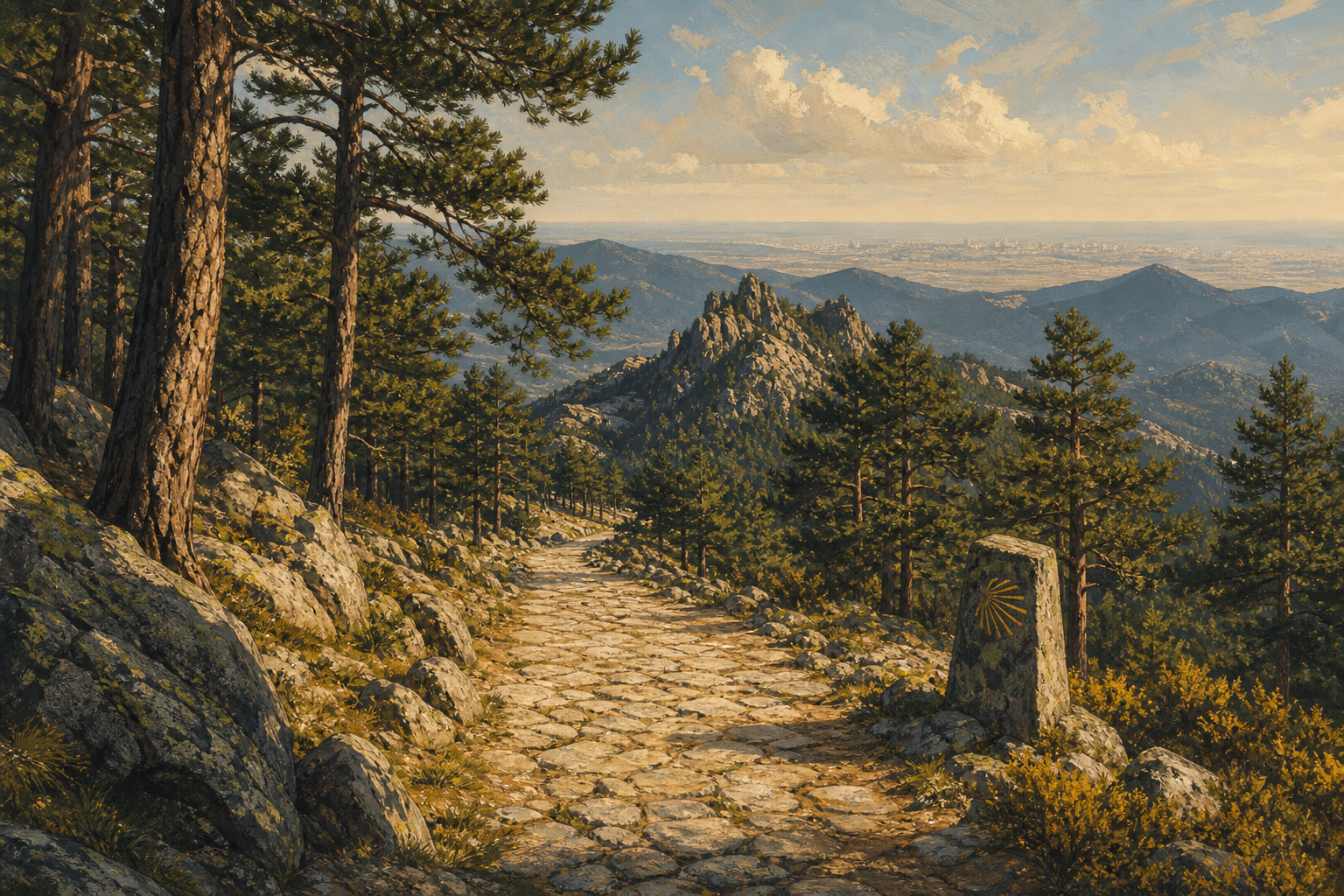
Camino de Madrid
A connector from Spain's capital over the Guadarrama mountains, past Segovia and across the Castilian plateau to Sahagún, where pilgrims continue west on the Camino Francés.
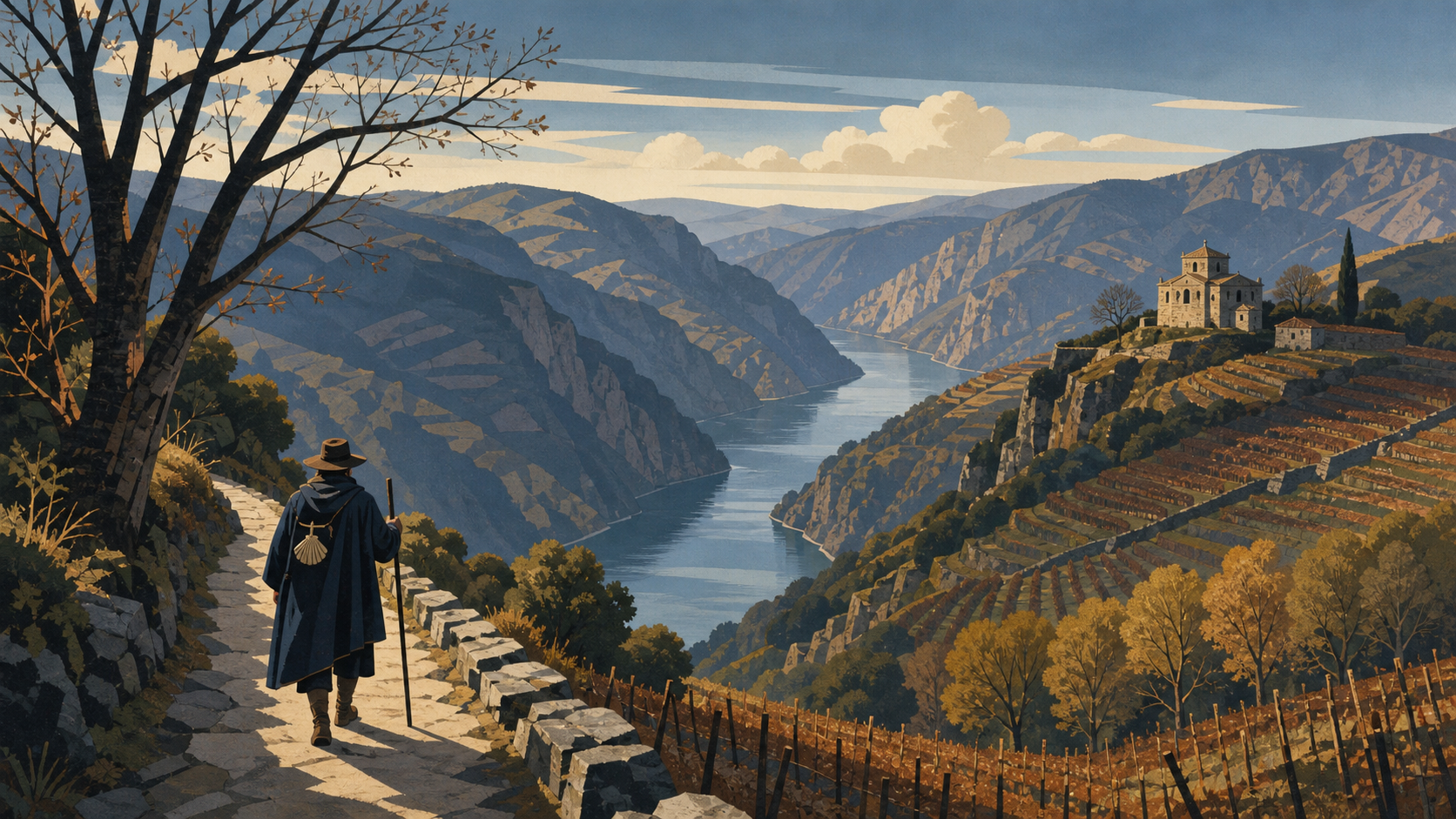
Camino de Invierno
A quieter alternative from Ponferrada that follows the Sil through Valdeorras and the terraced Ribeira Sacra before crossing Deza to Santiago, historically avoiding O Cebreiro's winter heights.
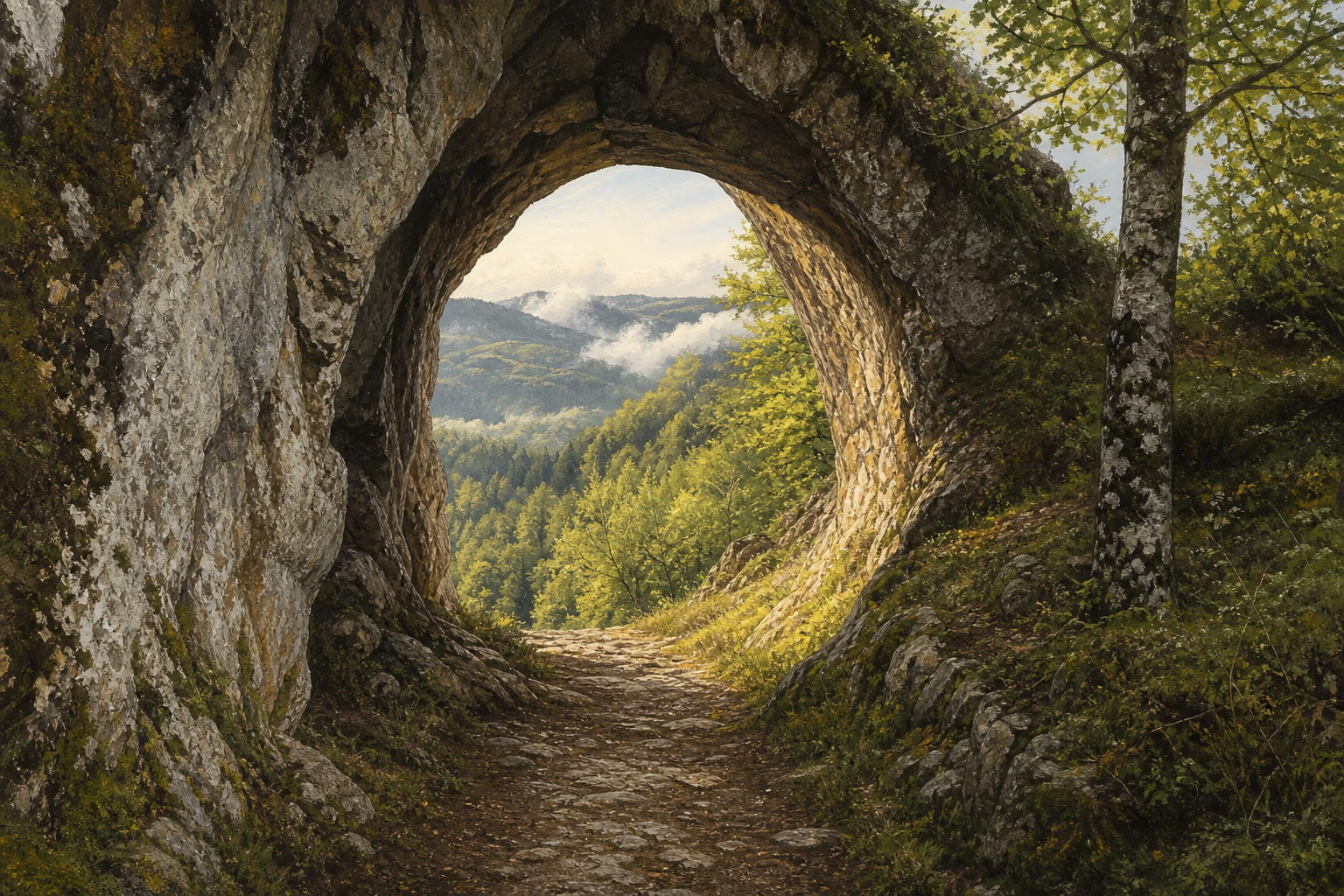
Camino Vasco del Interior
The inland Basque road from Irún through forested Gipuzkoa, the San Adrián passage and Vitoria-Gasteiz to Santo Domingo de la Calzada, where it meets the Camino Francés.
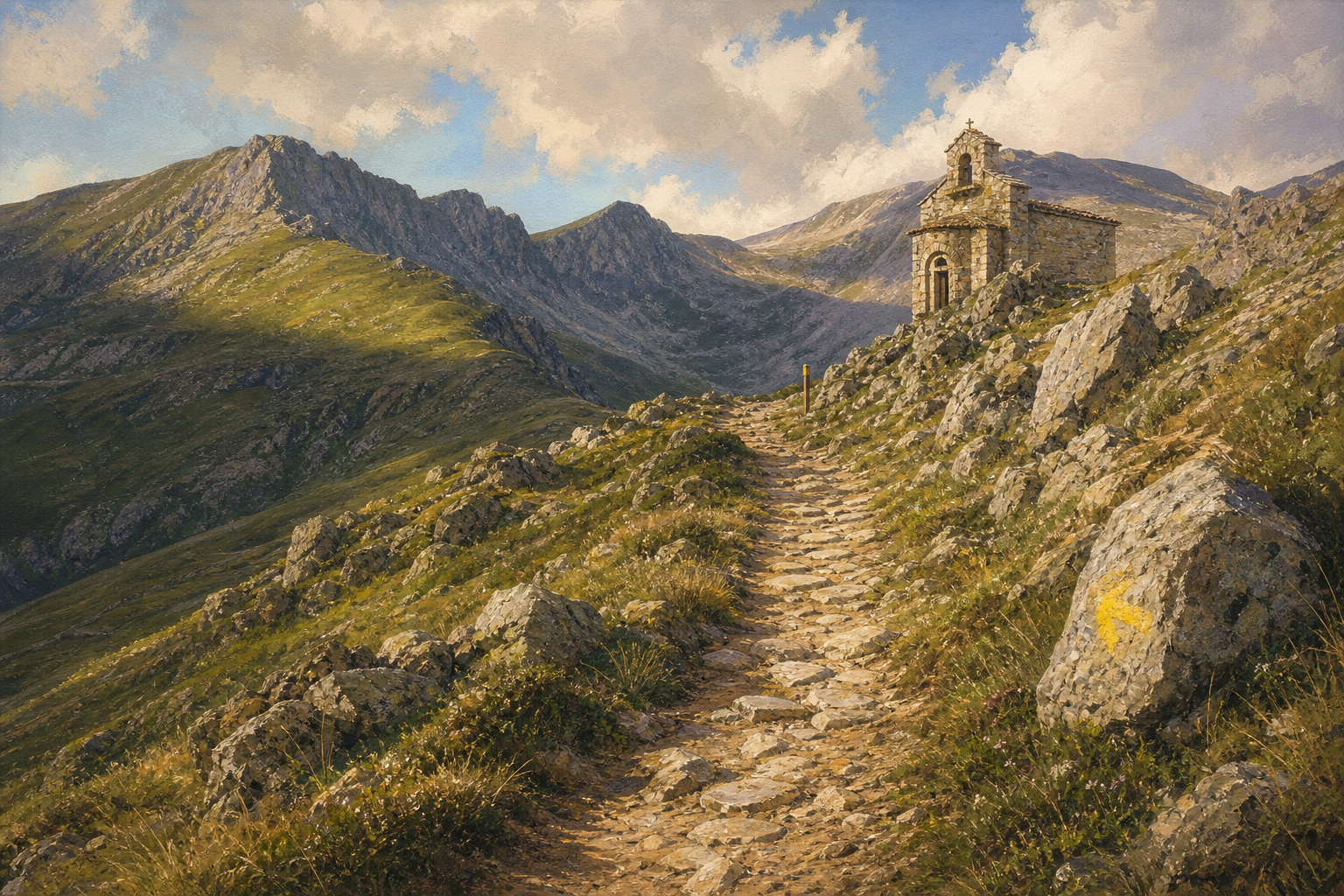
Camino del Salvador
A demanding mountain connector from the Camino Francés at León across the Cantabrian range to Oviedo. From there, pilgrims can continue toward Santiago on the Camino Primitivo.
American Caminos and historic trails
Pilgrims have always begun from home. Some routes here carry credentials or formally connect to a later walk in Spain; others are historically resonant long-distance journeys and are labeled separately so that distinction stays clear.
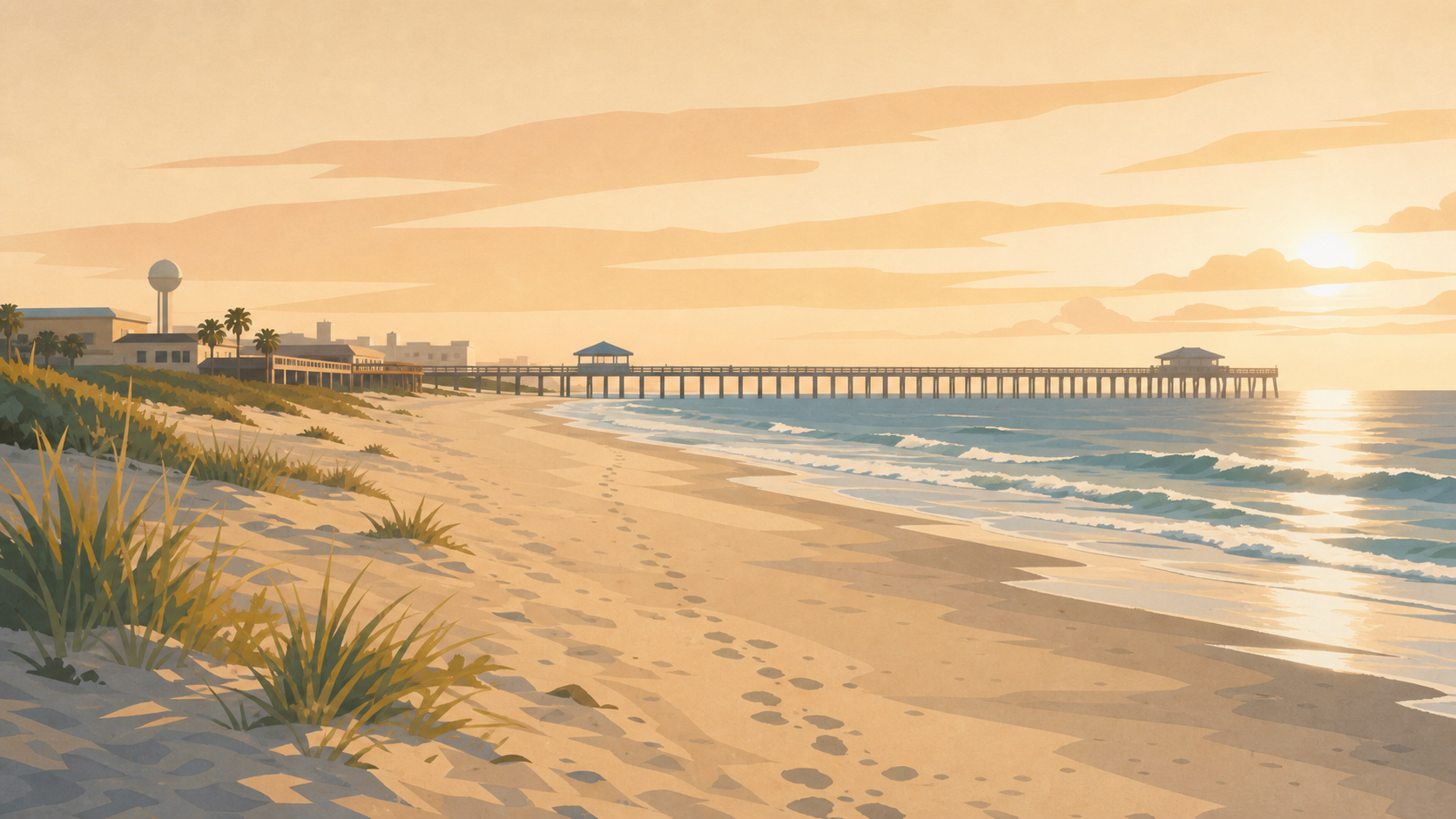
First Coast Camino de las Américas
A living American beginning: fifty coastal kilometres from Jacksonville Beach to the Cathedral Basilica of St. Augustine, joining beach, estuary, shrine and the oldest European-founded city in the continental United States.
El Camino de San Antonio Missions
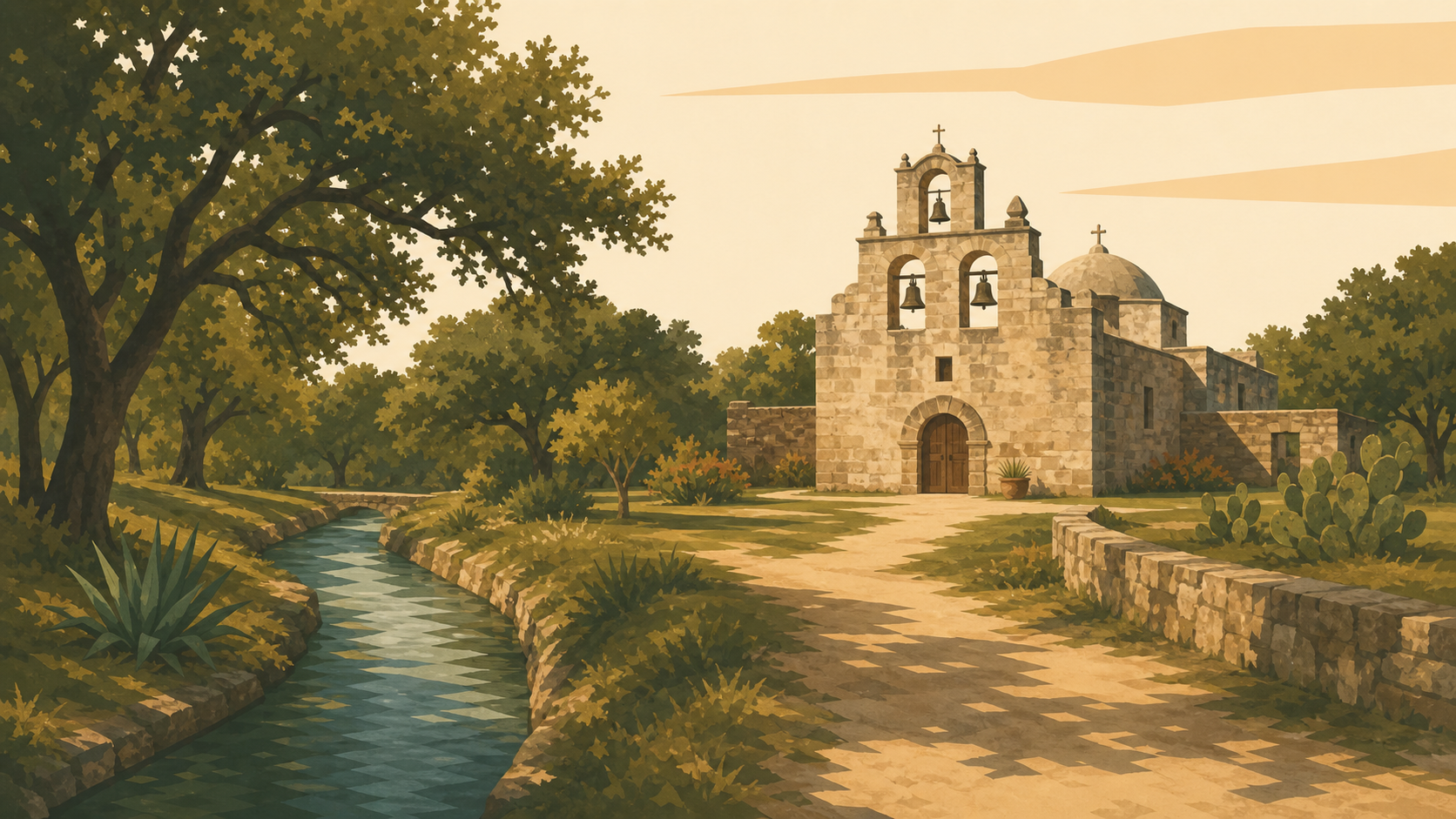
A thirty-kilometre pilgrimage through the living mission churches of San Antonio, following the river and old acequia landscape north from Mission Espada to San Fernando Cathedral.
California's Historic Mission Trail
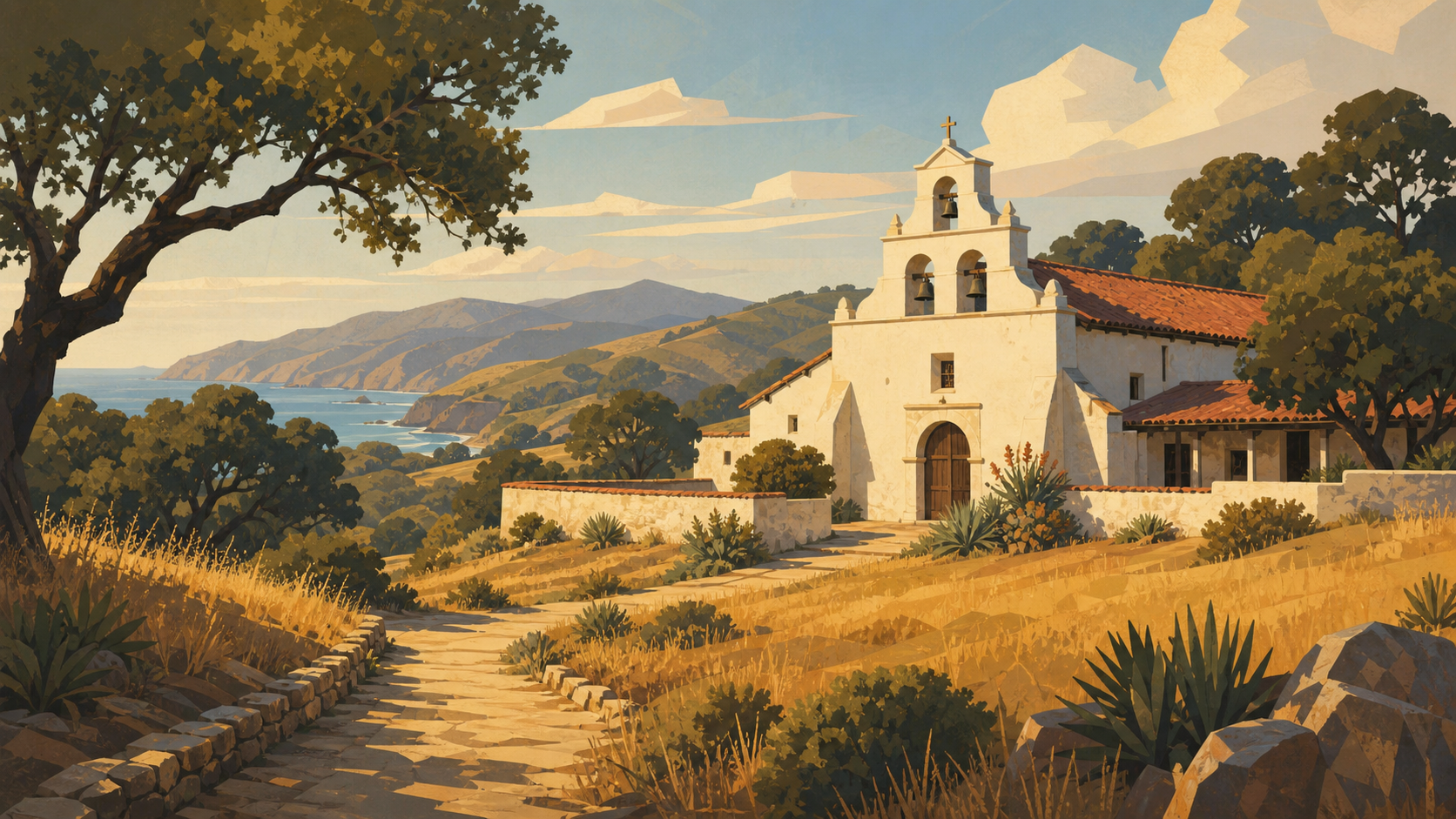
An approximately eight-hundred-kilometre historical journey linking California's twenty-one Spanish missions from San Diego to Sonoma. It follows the idea of El Camino Real through living Indigenous homelands and a complex colonial history. This is not an official Camino de Santiago and not a continuous pilgrim-ready walking route: safe foot alignments, lodging, water, access, credentials and other services require independent, section-by-section planning.
Camino del Norte a Chimayó
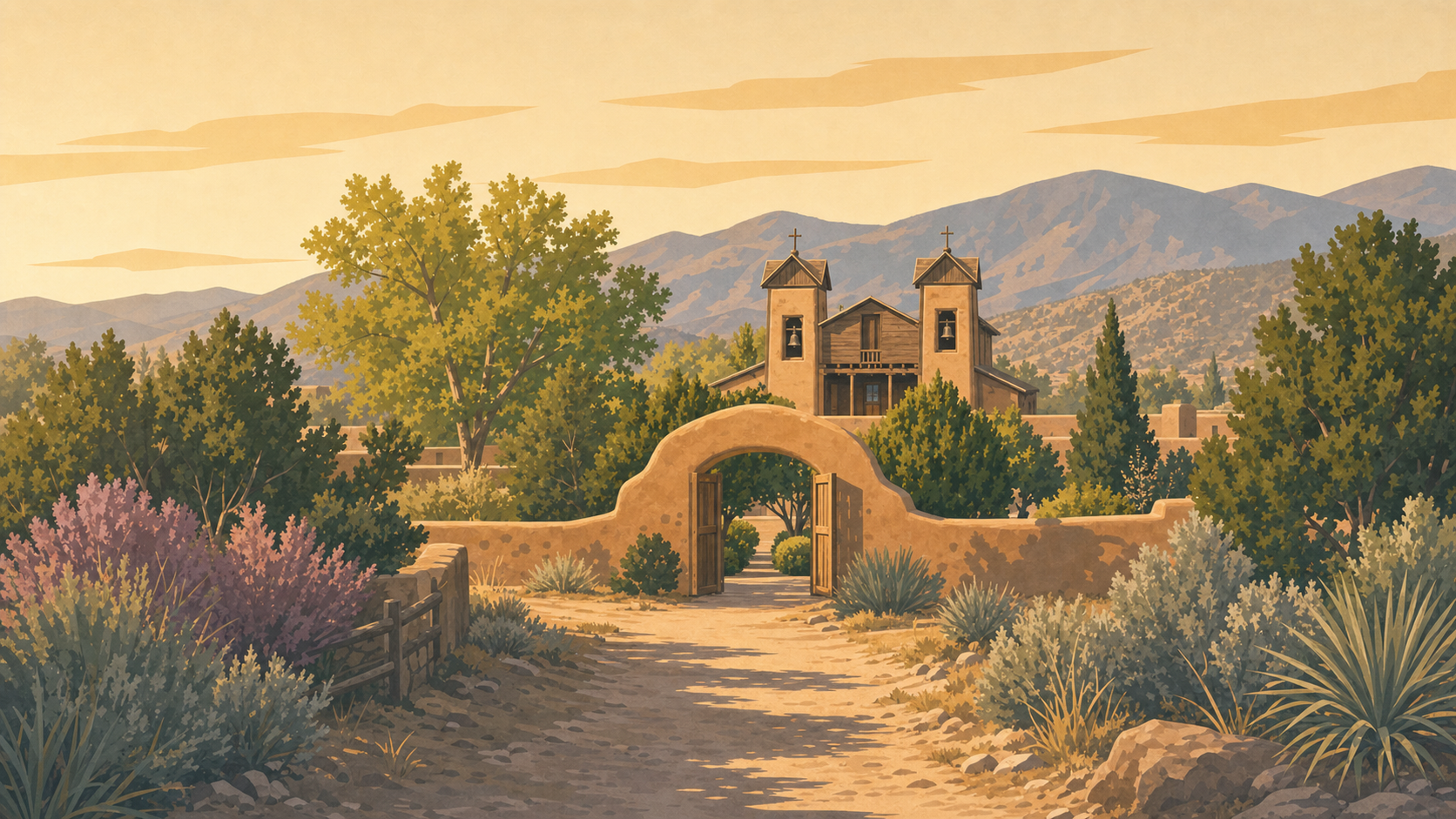
A demanding high-desert pilgrimage from San Luis, Colorado, through the Taos country and the Sangre de Cristo Mountains to El Santuario de Chimayó. It belongs to New Mexico's living pilgrimage tradition and is not a Compostela-qualifying Camino de Santiago route.

Camino de San Francisco
A modern Bay Area pilgrimage from Mission San Rafael Arcángel through Marin trails and across the Golden Gate Bridge to Mission San Francisco de Asís. It is inspired by the Camino tradition but is not presented here as a Compostela-qualifying route.
These are beginnings, not boundaries.
Historically, pilgrims left from their own front doors. Today the marked Saint James network reaches across Europe, while connected and qualifying pilgrim routes are growing in the Americas and elsewhere. This catalog is the first expansion, not an exhaustive claim.
France and Europe
Le Puy, Vézelay, Paris and Arles feed the Spanish network; the wider European federation maps Saint James ways in countries from Portugal to Lithuania and Ukraine.
Britain and Ireland
Medieval pilgrims walked to ports before sailing for Galicia. Revived British and Irish pilgrim paths continue that idea, with some recognized toward a Compostela.
The Americas
The catalog now reaches Florida, Texas, California, Colorado and northern New Mexico. The larger Camino de las Américas remains a developing network rather than one continuous, supported trail.
Pilgrimage worldwide
Related traditions extend far beyond the Camino network—from Japan's Kumano Kodō to Scandinavian and Korean pilgrim paths—each with its own history and destination.